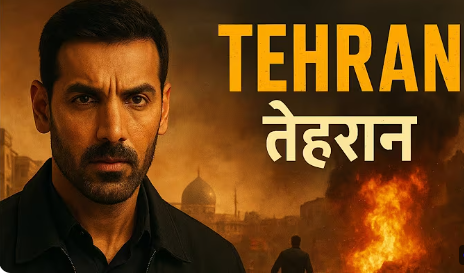
Tehran Movie Deep Review
Introduction to Tehran
Tehran is a gripping political thriller that explores the tense and complex relationship between espionage, identity, and survival in one of the world’s most politically sensitive cities. Although often recognized as a television series, its cinematic storytelling style, layered characters, and high production quality give it the emotional depth and visual intensity of a full-scale feature film. Set against the backdrop of Iran’s capital, the narrative blends geopolitical tension with deeply personal conflict, creating an immersive experience that goes far beyond a standard spy drama.
The story centers on Tamar Rabinyan, a young and highly skilled Mossad agent who is sent on a dangerous undercover mission in Tehran. What begins as a strategic cyber operation quickly spirals into a life-or-death struggle as plans unravel, alliances shift, and trust becomes fragile. The result is a suspense-driven narrative filled with moral ambiguity and psychological depth.
Plot Overview
The narrative follows Tamar as she infiltrates Tehran under a false identity to disable Iran’s air defense system. The operation is meant to pave the way for a larger military strike. However, unforeseen complications derail the mission, leaving Tamar stranded in hostile territory.
As she navigates unfamiliar terrain, she reconnects with her Iranian roots and encounters individuals whose lives challenge her perception of “enemy” and “ally.” The tension builds through intense chase sequences, covert surveillance operations, and emotionally charged confrontations.
The storyline is not limited to action. It delves into cultural identity, internal conflict, and the consequences of political decisions on ordinary citizens. Each episode-like progression adds layers to the narrative, building toward moments of unexpected vulnerability and explosive suspense.
Main Characters and Performances
Character development is one of the strongest elements of Tehran. The performances feel authentic and grounded, adding credibility to the high-stakes storyline.
| Character Name | Role in Story | Performance Highlights |
|---|---|---|
| Tamar Rabinyan | Mossad agent on undercover mission | Portrays emotional conflict and strength with nuance |
| Faraz Kamali | Iranian Revolutionary Guard officer | Intense, determined, yet humanized antagonist |
| Milad | Local dissident hacker | Adds emotional warmth and ideological contrast |
| Mossad Commanders | Strategic decision-makers | Represent political pressure and calculated risk |
Tamar’s character is particularly compelling because she is not portrayed as invincible. She is intelligent and brave, yet vulnerable and emotionally complex. Faraz, often positioned as her adversary, is depicted with surprising depth. He is not simply a villain but a loyal officer with personal struggles and moral dilemmas.
Themes Explored in the Film
1. Identity and Belonging
One of the most powerful themes in Tehran is identity. Tamar, though Israeli, has Iranian roots. Her return to Tehran forces her to confront questions about culture, belonging, and heritage. The city is both foreign and familiar, creating an emotional duality that shapes her decisions.
2. Moral Ambiguity in Espionage
Unlike traditional spy thrillers that clearly divide heroes and villains, Tehran presents a morally grey landscape. Intelligence agencies on both sides justify their actions as necessary for national security. The audience is encouraged to question whether the ends truly justify the means.
3. Human Cost of Political Conflict
The narrative consistently highlights how ordinary citizens are affected by covert operations and political agendas. Families, friendships, and personal dreams become collateral damage in the larger geopolitical game.
4. Trust and Betrayal
Trust is fragile throughout the story. Every relationship—whether romantic, professional, or familial—carries the possibility of betrayal. This constant uncertainty keeps the tension high and the audience emotionally invested.
Cinematography and Visual Style
The visual storytelling in Tehran is striking. The city is portrayed not just as a setting but as a living, breathing character. The narrow streets, dimly lit apartments, and bustling urban landscapes create an atmosphere of constant tension.
| Visual Element | Impact on Audience |
|---|---|
| Night-time urban shots | Enhance suspense and secrecy |
| Close-up character frames | Intensify emotional connection |
| Handheld camera movement | Creates realism and urgency |
| Muted color palette | Reflects somber political tone |
The use of shadow and lighting emphasizes isolation and paranoia. Surveillance scenes feel authentic, and chase sequences are filmed with raw intensity rather than exaggerated spectacle.
Direction and Narrative Structure
The direction balances action and introspection effectively. Rather than relying solely on explosive sequences, the narrative takes time to develop psychological tension. Slow-burning scenes of conversation often carry as much weight as high-speed pursuits.
The pacing is deliberate. Early scenes establish character motivations and political context, while later segments accelerate into high-stakes confrontations. This structured buildup ensures that emotional payoffs feel earned rather than forced.
The screenplay avoids excessive exposition. Information is revealed gradually, encouraging viewers to piece together political strategies and personal motivations on their own.
Cultural Representation
One of the most praised aspects of Tehran is its portrayal of Iranian society. Instead of presenting a one-dimensional image, the story showcases diverse perspectives within the city. Young activists, government officials, and everyday citizens are depicted with individuality and complexity.
The film challenges stereotypes by showing moments of warmth, humor, and normalcy within a politically tense environment. This layered representation adds authenticity and emotional weight to the narrative.
Music and Sound Design
The soundtrack complements the suspense-driven tone. Subtle electronic undertones build anxiety, while quiet instrumental pieces enhance emotional scenes. Silence is also used strategically, especially during covert operations, amplifying tension.
Sound design plays a crucial role during chase sequences and surveillance scenes. The echo of footsteps, distant sirens, and sudden bursts of noise heighten realism and keep viewers on edge.
Emotional Depth and Psychological Tension
Beyond its political narrative, Tehran functions as a psychological thriller. Tamar’s internal struggle—balancing loyalty to her mission with her rediscovered connection to her roots—creates a deeply personal conflict.
Faraz’s perspective adds another layer of emotional complexity. His dedication to his country clashes with his responsibilities as a husband and future father. These parallel personal arcs mirror the larger political standoff, reinforcing the idea that individuals carry the emotional burden of national decisions.
The tension does not rely solely on physical danger. Psychological pressure, secrecy, and fear of exposure drive much of the suspense.
Strengths and Weaknesses
| Strengths | Weaknesses |
|---|---|
| Complex, multi-dimensional characters | Some political details may feel dense for casual viewers |
| Realistic portrayal of espionage | Pacing may feel slow in dialogue-heavy scenes |
| High-quality cinematography | Emotional heaviness may not appeal to all audiences |
| Balanced cultural representation | Limited moments of relief from tension |
The strengths significantly outweigh the weaknesses. The slower pacing in certain sections contributes to the overall realism rather than detracting from it.
Overall Impact
Tehran stands out as more than just a spy thriller. It is a layered exploration of identity, loyalty, and the human cost of political conflict. Its realistic approach to espionage, combined with emotionally driven storytelling, elevates it above many conventional action dramas.
The narrative encourages viewers to see beyond national boundaries and recognize the shared humanity on both sides of political divides. By blending suspense, emotional depth, and cultural nuance, Tehran delivers a thought-provoking and intensely engaging cinematic experience.
Read Article: Tehran Movie – Special Characters and Their Impact on Storytelling
Conclusion
Tehran is a remarkable spy thriller that successfully combines political tension, emotional storytelling, and realistic espionage action. The movie stands out because it focuses not only on international conflict but also on the personal struggles of its characters. Tamar’s journey of survival, identity discovery, and loyalty testing makes the story deeply human despite its political backdrop.
The film’s strength lies in its balanced narrative approach, where action sequences are supported by psychological depth and cultural exploration. Instead of presenting simple hero-versus-villain storytelling, Tehran shows that conflict is often complex and morally uncertain. The performances, especially of the main characters, add authenticity and emotional intensity to the plot.
Overall, Tehran is more than just entertainment; it is a thoughtful cinematic experience that encourages viewers to reflect on identity, politics, and human relationships in times of tension. Its combination of suspense, character development, and cultural representation makes it a memorable addition to modern political thriller cinema.
Frequently Asked Questions (FAQs)
1. Is Tehran based on a real story?
No, Tehran is not based on a specific real-life operation. However, it reflects realistic geopolitical tensions and espionage scenarios inspired by real-world intelligence conflicts.
2. What genre does Tehran belong to?
The movie/series belongs to the political thriller and spy drama genre with strong psychological and action elements.
3. Who should watch Tehran?
It is suitable for viewers who enjoy suspenseful storytelling, intelligence operations, character-driven plots, and political drama.
4. Is the movie very action-heavy?
No. While action scenes are present, the story focuses more on strategy, tension, and emotional conflict rather than nonstop combat.
5. What makes Tehran different from other spy movies?
Its focus on moral ambiguity, cultural identity, realistic espionage, and psychological tension makes it stand out from typical spy thrillers.
6. Is the cinematography good?
Yes. The film uses dark urban visuals, close character framing, and realistic movement to create a tense atmosphere.
7. Does the story have strong character development?
Yes, especially for Tamar and Faraz, whose personal struggles play a major role in the narrative.
8. Is Tehran worth watching?
If you enjoy intelligent thriller storytelling with emotional and political depth, it is definitely worth watching.