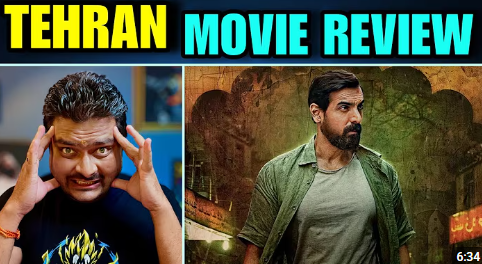
Tehran Movie Full Explained Reviews – Story, Themes, and Deep Analysis
Introduction to Tehran
“Tehran” is a powerful political thriller that explores the hidden layers of espionage, identity, loyalty, and survival within one of the most politically sensitive regions in the world. Set against the intense backdrop of Iran’s capital city, the film (often associated with the broader Tehran spy narrative popularized in global cinema) combines emotional depth with high-stakes intelligence operations. Rather than relying only on action, the story focuses on psychological tension, moral dilemmas, and cultural complexities.
The narrative follows an undercover mission that slowly transforms into a battle between personal identity and professional duty. Through carefully crafted characters and realistic storytelling, Tehran presents a world where nothing is black and white.
Plot Overview
The film centers around a young intelligence operative sent on a classified mission inside Tehran. Her objective appears straightforward at first: infiltrate a secure system, gather critical information, and exit safely. However, once inside the city, unexpected complications begin to unfold.
As she navigates through unfamiliar territory, she encounters locals whose lives challenge her perceptions. The mission becomes complicated by:
- Surveillance pressure from local authorities
- Internal mistrust within intelligence agencies
- Emotional conflict tied to her heritage
- Growing doubts about the consequences of her assignment
What begins as a strategic operation gradually becomes a deeply personal journey. The city of Tehran itself becomes more than just a setting; it transforms into a living, breathing force influencing every decision.
Main Characters and Their Roles
| Character Type | Role in Story | Psychological Depth | Impact on Narrative |
|---|---|---|---|
| Undercover Agent | Protagonist on a classified mission | Torn between identity and duty | Drives central conflict |
| Intelligence Handler | Guides mission remotely | Strategic but emotionally distant | Represents political interests |
| Local Civilian Ally | Unexpected support | Humanizes the setting | Creates moral complexity |
| Iranian Security Officer | Antagonist figure | Motivated by national loyalty | Builds tension and suspense |
Each character contributes to the layered storytelling. The protagonist’s internal struggle forms the emotional backbone of the film, while supporting characters add realism and depth.
Detailed Story Explanation
Phase 1: The Infiltration
The story begins with meticulous planning. The protagonist receives her assignment and enters Tehran under a fabricated identity. Early scenes focus on technology, coded communication, and digital penetration. The pacing is steady, emphasizing realism rather than flashy action.
She successfully enters restricted systems but quickly discovers the mission is more complicated than originally briefed. Unexpected counter-intelligence measures put her at risk.
Phase 2: Exposure and Adaptation
As suspicion grows, the protagonist must adapt. She loses certain communication channels and is forced to rely on local contacts. Here, the film shifts tone from technical espionage to survival drama.
Her encounters with everyday citizens reveal a different side of Tehran—families, students, workers—all living under political tension. These interactions humanize the setting and blur the line between enemy and civilian.
Phase 3: Moral Conflict
The mission’s true objective slowly unfolds. It may cause widespread disruption or even violence. The protagonist must decide whether completing the mission is worth the potential consequences.
This is where the film becomes emotionally intense. Rather than focusing purely on geopolitical stakes, the narrative explores:
- Identity crisis
- Cultural belonging
- Moral responsibility
- Loyalty versus humanity
Phase 4: Climactic Tension
The final act is driven by urgency. Surveillance tightens, trust diminishes, and time runs out. The protagonist faces a defining decision—complete the mission or alter its outcome.
The climax is less about explosive action and more about psychological resolution. The ending leaves room for interpretation, encouraging viewers to question the true cost of intelligence operations.
Themes Explored in Tehran
| Theme | Explanation | Narrative Importance |
|---|---|---|
| Identity | Dual nationality and cultural roots | Central emotional struggle |
| Loyalty | Duty to country vs personal ethics | Drives moral conflict |
| Surveillance | Constant monitoring and control | Builds tension |
| Isolation | Emotional and physical loneliness | Deepens character realism |
| Political Complexity | No clear heroes or villains | Adds realism and depth |
The film avoids simplistic portrayals. Instead of labeling one side as purely good or evil, it presents motivations from multiple perspectives.
Cinematography and Atmosphere
One of the film’s strongest elements is its visual tone. Tehran is portrayed with authenticity—crowded streets, dimly lit apartments, modern infrastructure mixed with traditional culture. The camera work often uses tight framing to create a sense of claustrophobia, reinforcing the idea of constant surveillance.
Color grading plays a major role. Cooler tones dominate scenes involving intelligence operations, while warmer shades appear in personal interactions. This subtle contrast visually represents the duality of the protagonist’s world.
Sound design is equally impactful. Instead of loud background scores, silence is often used to increase tension. Footsteps, distant sirens, and whispered conversations carry emotional weight.
Acting Performance Analysis
The lead performance stands out due to its subtlety. Rather than exaggerated emotion, the protagonist communicates through facial expressions and restrained dialogue. Her internal conflict is visible in small gestures—hesitation before sending a message, anxiety during identity checks, or quiet reflection after difficult choices.
Supporting actors bring authenticity to their roles. The Iranian security officer, in particular, is portrayed not as a stereotype but as a professional doing his duty. This balanced portrayal adds complexity to the narrative.
Political and Cultural Context
Tehran as a film operates within a sensitive geopolitical framework. It touches upon real-world tensions between nations but avoids becoming propaganda. Instead, it focuses on the human impact of political rivalry.
The story reflects modern intelligence warfare, where cyber operations and digital infiltration are more common than traditional battlefield combat. This makes the film relevant to contemporary global politics.
Culturally, the film attempts to show Iranian society beyond headlines. Viewers see daily life, personal dreams, and family bonds. This representation challenges oversimplified global narratives.
Strengths of the Film
- Realistic depiction of cyber espionage
- Emotionally layered protagonist
- Strong atmospheric tension
- Balanced political storytelling
- Thought-provoking moral dilemmas
The film succeeds in combining thriller elements with philosophical reflection.
Areas Where Viewers May Feel Divided
Some audiences may find the pacing slow compared to action-heavy spy movies. The film prioritizes character development over explosive sequences. Additionally, the ambiguous ending may leave viewers wanting clearer resolution.
However, these aspects are intentional. The storytelling style mirrors the uncertainty of real intelligence work.
Symbolism in the Story
Several symbolic elements enrich the narrative:
- Mirrors and reflections represent dual identity.
- Closed doors and narrow corridors symbolize entrapment.
- Digital screens and code sequences highlight the invisible nature of modern warfare.
These recurring motifs strengthen the film’s psychological tone.
Overall Review and Critical Perspective
“Tehran” stands out as a mature, intelligent thriller that values realism over spectacle. It invites audiences to consider the human side of global conflict. Rather than glorifying espionage, it exposes its emotional and ethical consequences.
The film’s greatest achievement lies in its refusal to simplify complex issues. It portrays individuals caught between nations, highlighting how personal identity can become entangled in political agendas.
For viewers who appreciate layered storytelling, cultural depth, and psychological tension, Tehran offers a compelling cinematic experience. It is not merely a spy film; it is a character study wrapped inside a geopolitical thriller.
The lasting impact of the movie comes from its questions rather than its answers, encouraging deeper reflection long after the credits roll.
Read Article: Tehran Movie Famous Actor Review: John Abraham’s Powerful Transformation on the Global Stage
Conclusion
“Tehran” delivers a gripping and intellectually engaging cinematic experience that goes far beyond the surface of a conventional spy thriller. By blending political tension with deeply personal conflict, the film succeeds in presenting espionage not just as a strategic game between nations, but as a human struggle filled with emotional consequences and moral uncertainty.
At its core, the story is about identity—how heritage, loyalty, and personal belief systems collide when placed under extreme pressure. The protagonist’s journey reflects the complexity of living between two worlds, where every decision carries both political and personal weight. Instead of offering simple answers, the film invites viewers to question the ethics of intelligence operations and the hidden costs behind national security agendas.
Visually immersive and psychologically layered, Tehran stands out for its realism, subtle performances, and atmospheric storytelling. It challenges stereotypes, humanizes opposing perspectives, and portrays modern geopolitical conflict through a nuanced lens. The slow-building tension, combined with strong character development, ensures that the emotional impact lingers even after the story concludes.
Ultimately, Tehran is not just a film about espionage—it is a thought-provoking exploration of loyalty, morality, and the fragile line between duty and conscience.
FAQs
1. What is the main story of the Tehran movie?
The main story revolves around an undercover intelligence operative sent on a secret mission inside Tehran. What begins as a technical cyber operation gradually turns into a psychological and emotional struggle as the protagonist faces moral dilemmas, identity conflicts, and increasing surveillance pressure. The narrative focuses on how political missions affect personal identity and human relationships.
2. Is Tehran based on a true story?
Tehran is not a direct adaptation of one specific true story, but it is inspired by real-world geopolitical tensions and modern intelligence operations. The cyber warfare, espionage tactics, and political environment reflect realistic global conflicts, making the story feel authentic and believable.
3. What genre does Tehran belong to?
Tehran primarily falls under the political thriller and espionage genre. However, it also includes elements of psychological drama and suspense. Instead of focusing only on action, the film emphasizes emotional tension and character development.
4. What makes Tehran different from other spy movies?
Unlike many action-heavy spy films, Tehran focuses more on realism and moral complexity. It avoids exaggerated fight scenes and instead builds tension through surveillance, internal conflict, and strategic decision-making. The film also presents multiple perspectives rather than showing a clear hero-versus-villain dynamic.
5. What themes are explored in Tehran?
The film explores several powerful themes, including identity, loyalty, cultural belonging, surveillance, political responsibility, and moral ambiguity. These themes are deeply connected to the protagonist’s personal journey and the broader geopolitical setting.
6. Is Tehran more action-based or dialogue-driven?
Tehran is more dialogue-driven and psychologically intense rather than action-focused. While there are suspenseful and high-stakes moments, the film relies heavily on conversations, subtle performances, and emotional tension to carry the narrative forward.
7. Why is identity such an important theme in the film?
Identity plays a central role because the protagonist is caught between two cultures and loyalties. Her background influences how she views her mission, the people around her, and the consequences of her actions. This dual identity creates internal conflict, which drives much of the emotional depth in the story.
8. Does the movie portray one side as completely right or wrong?
No, Tehran avoids portraying one side as entirely good or evil. Instead, it presents characters with understandable motivations shaped by national duty, personal beliefs, and political realities. This balanced approach makes the story more realistic and thought-provoking.
9. How important is the setting of Tehran in the movie?
The city of Tehran is extremely important to the narrative. It is not just a backdrop but an active element in the story. The atmosphere, culture, and political climate of the city influence the protagonist’s decisions and heighten the tension throughout the film.
10. Is Tehran suitable for viewers who prefer fast-paced thrillers?
Viewers who enjoy slow-burn political dramas and character-driven thrillers will appreciate Tehran the most. Those expecting constant action may find it more restrained, but the psychological intensity and layered storytelling provide a different kind of cinematic engagement.